Industry Information
GX53 Downlight Replacement Without an Electrician: B2B Guide
A GX53 module twists out by hand, so a failed light source is replaced without an electrician. Stocking and EAC checks for Russia and Central Asia buyers.
In many apartment blocks across Russia, Kazakhstan, Uzbekistan and Belarus the finished ceiling is the concrete slab itself, with no suspended ceiling to recess a fixture into. That makes the surface-mounted downlight the practical choice — and it makes the light source, rather than the ceiling bracket, the part that decides how expensive the next failure will be. When a sealed LED fixture fails, the whole unit comes down, an electrician is scheduled, the circuit is isolated, and the ceiling is left with a mark that the replacement never quite matches.
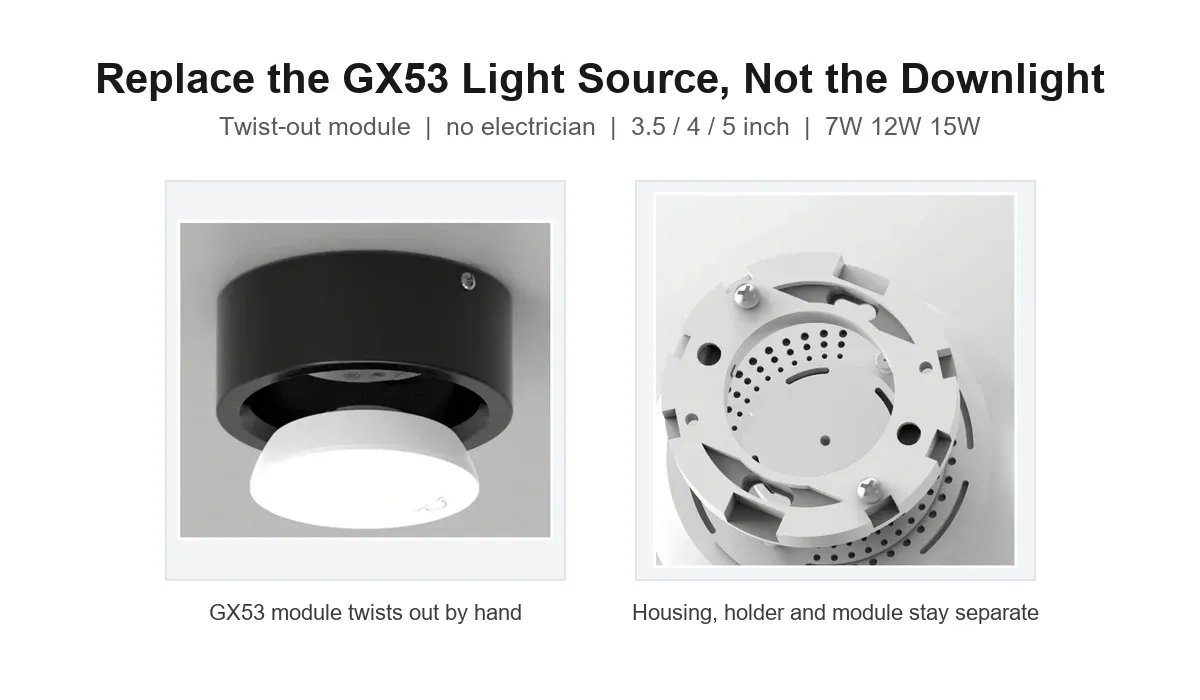
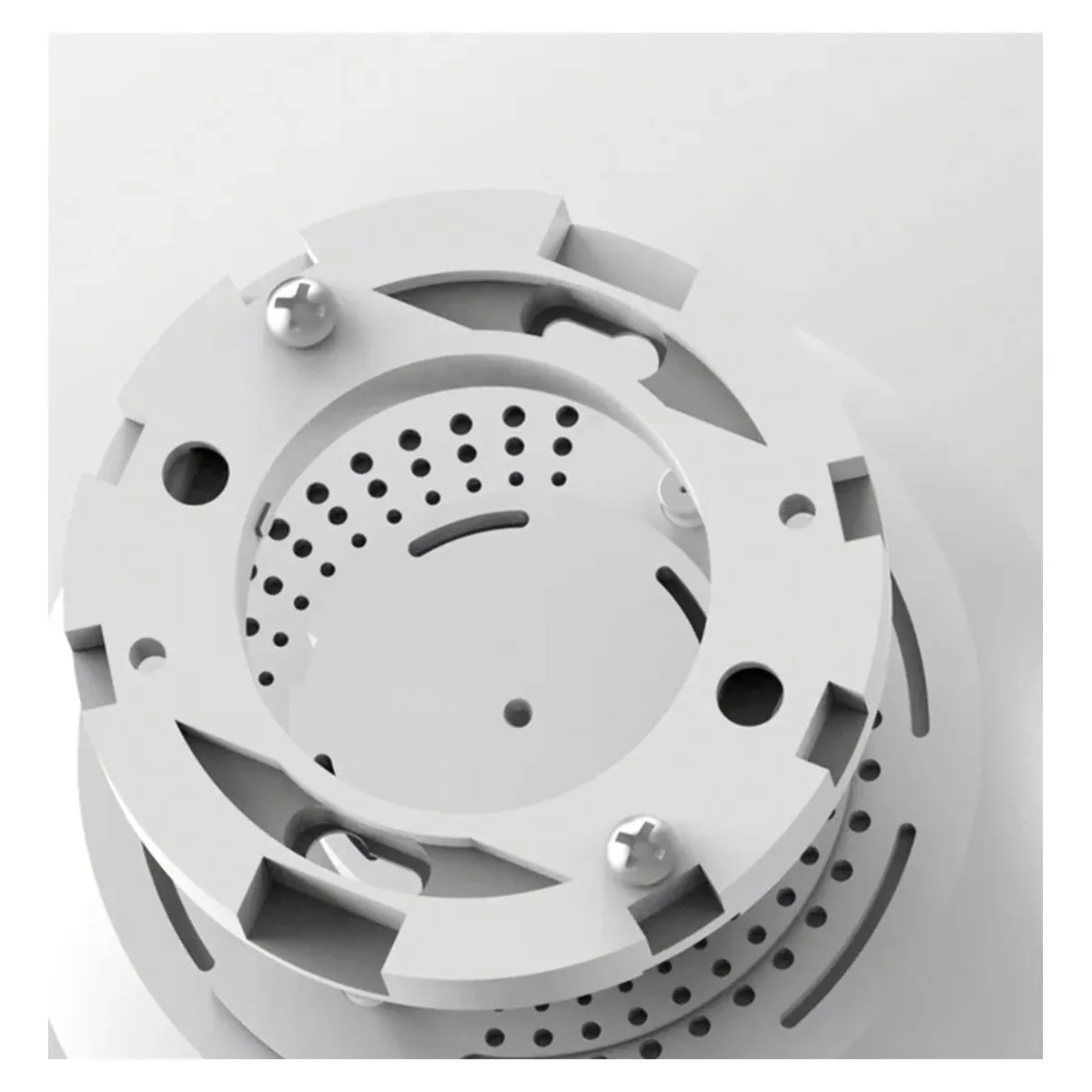
A GX53 downlight is built the other way around. The bracket, the housing and the lamp holder are installed once and stay installed. The light source is a separate GX53 module that twists out of the holder and back in again by hand. When it fails, the part that gets replaced is the part that actually wore out.
In short: a GX53 downlight replacement is a light source replacement. The module turns out by hand, the housing stays on the ceiling, and no electrician is needed for the failure that happens most often.
What a GX53 Downlight Replacement Actually Involves
Three parts are often described as "the downlight", and they are replaced by three different people at three different intervals.
Part | Installed by | Replaced by | Service interval |
|---|---|---|---|
Ceiling bracket and housing | Electrician, at fit-out | Nobody during normal service life | Once per fit-out |
GX53 lamp holder plate | Factory-fitted into the housing | Electrician, on mechanical damage only | Rarely |
GX53 LED module | End user, by hand | End user, by hand | At every failure or output change |
That separation is the whole point. A "GX53 downlight replacement" is usually not a downlight replacement at all — it is a module replacement, and it does not touch the fixed wiring. The only part that leaves the building is a flat disc that fits in a coat pocket.
How the GX53 Light Source Replacement Works
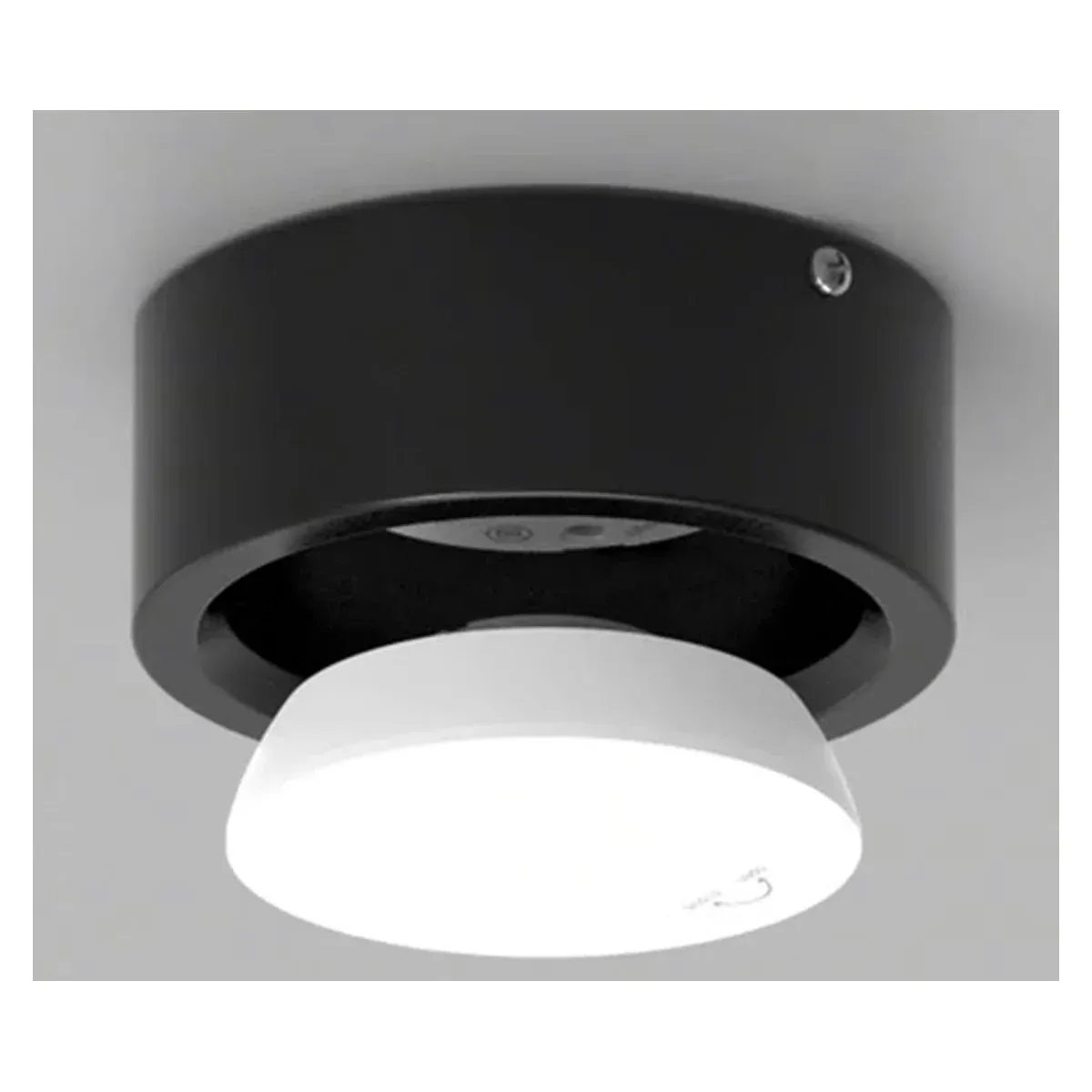
The procedure needs no tools and no access above the ceiling. The trim carries moulded open and close arrows showing which way the module turns.
- Isolate the lighting circuit at the wall. The holder is connected to mains, so treat every fixture as live until the circuit is off.
- Grip the module by its outer rim. There is no clip, screw or bezel to release first.
- Twist in the direction the open arrow on the trim indicates. The module unlocks from the holder and comes away in your hand.
- Align the pins of the new module with the holder slots and twist the opposite way until it seats against the trim.
- Restore the circuit and check the fixture.
The bracket, the housing and the wiring are untouched throughout. Nothing is drilled, nothing is pulled through the ceiling, and the ceiling surface is not disturbed — so a module swap cannot leave a patched ceiling or a trim that no longer matches its neighbours.
Why Four Buyer Types Care
Electrical importers and wholesalers
A single housing platform with separate module SKUs turns the installed base into a repeat-parts business. You sell the fixture once and the module whenever it fails, instead of processing a whole-fixture return each time. The commercial exposure per failure also drops: a module claim is a low-value replacement, not a full fixture write-off.
Contractors and installation teams
In practice, many callbacks on a sealed downlight are not installation faults at all. They are light-source failures that show up months later, when the original installer has left the site. With a GX53 housing, that callback can be closed by whoever is on site, without a second visit carrying tools and a replacement fixture.
Hotels, serviced apartments and rental operators
Maintenance or housekeeping staff can change a module between guests. There is no electrician to schedule and no room held out of service for a lighting fault, which matters most in properties where rooms turn over daily.
Offices, retail and facility management
Because the housing stays, a lighting upgrade does not become a fit-out. Where the thermal design of the housing allows it, a module of a different output can replace the original one in the same trim, so a corridor, a shop floor and an office can be adjusted without touching the ceiling.
Technical Details to Verify Before You Buy
The values below are visible on the sample shown in the product video and on the supplied module photographs. Anything not listed here is confirmed against your specification and destination at quotation stage.
Item | What the sample shows | Why it matters |
|---|---|---|
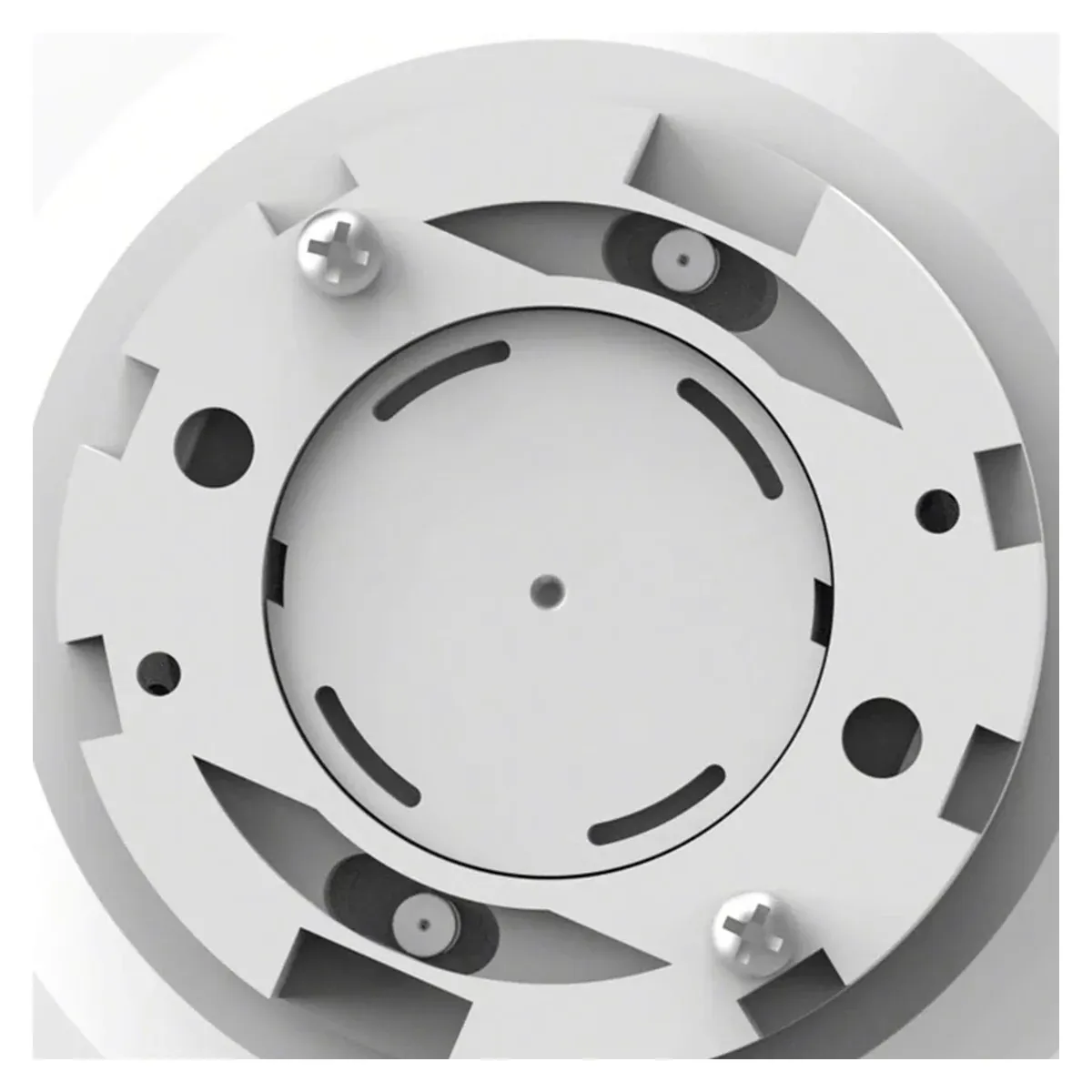
Lamp holder | GX53, marked Max 30W | Sets the ceiling for module wattage in that housing |
Marking on the holder plate | 50Hz, 220-240V | Matches the mains supplied across Russia, Belarus, Kazakhstan and Central Asia |
Module input | 175-265V, 50-60Hz on the supplied module label | Wide-range input tolerates the voltage sag common on older local networks |
Module sample | 10W, 6000K | Cool-white reference; other wattages and colour temperatures are confirmed per order |
Housing sizes | 3.5 in, 4 in, 5 in | Shown paired with 7W, 12W and 15W modules in the range |
Body finish | Matte black and matte white | Matches existing ceiling hardware and switch plates |
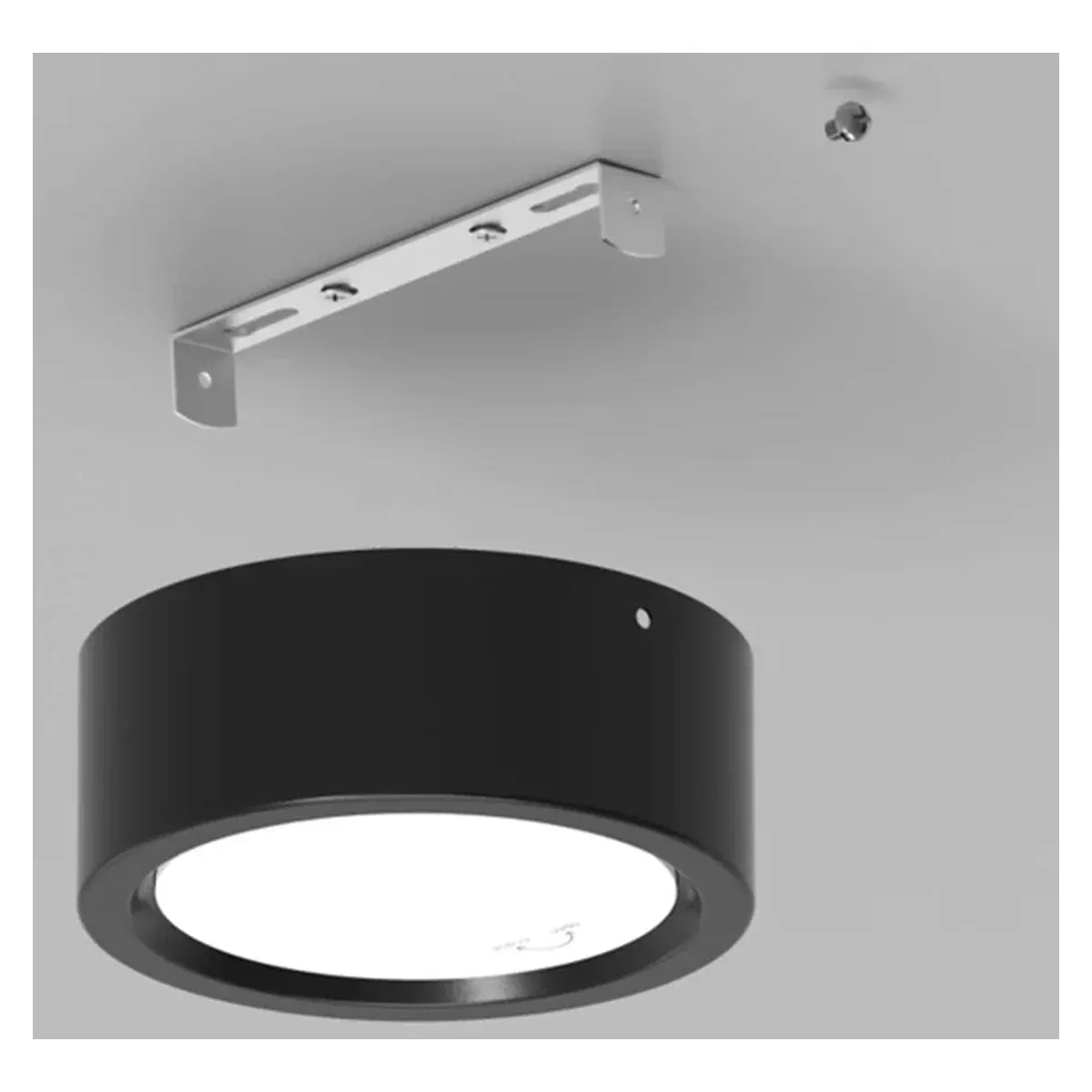
Mounting | Surface-mounted on a cross bracket with slotted screw holes | Fits a concrete slab ceiling with no false ceiling and no cut-out |
Marking on the holder | CE and EAC | Matches the conformity marking EAEU customs and retail buyers look for |
Deliberately not published on this page: MOQ, unit price, lead time, IP rating, CRI, lumen output, beam angle, warranty terms and exact bezel diameter. Those depend on the configuration and the destination market, and quoting them from a web page instead of a specification sheet is how purchase orders end up with the wrong product on them.
GX53, GU10 and E27: What Actually Changes for Maintenance
All three formats keep the housing and replace the light source, so the maintenance principle is not unique to GX53. The difference is geometry and what sits behind the ceiling.
Format | Base | Face diameter (typical) | Light source and fit |
|---|---|---|---|
GX53 | Two-pin twist-lock | 53 mm | Flat integrated LED module, sits close to flush with the trim |
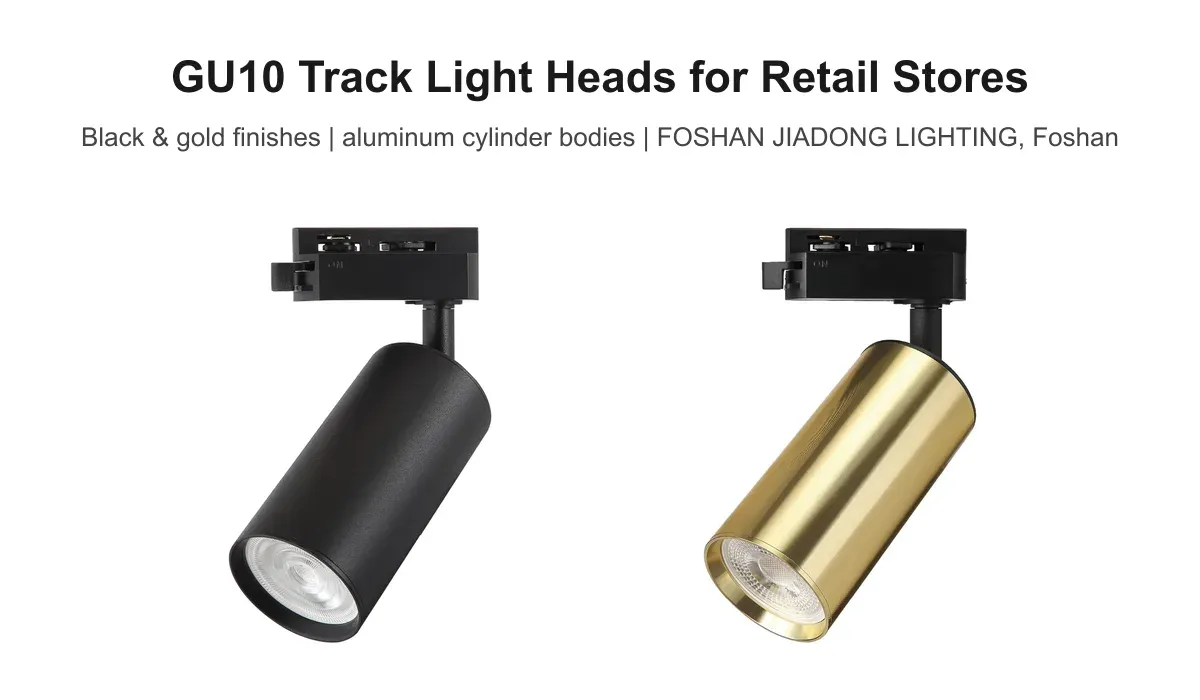
GU10 | Two-pin twist-lock | 50 mm | Lamp with its own reflector; needs depth or protrudes below the trim |
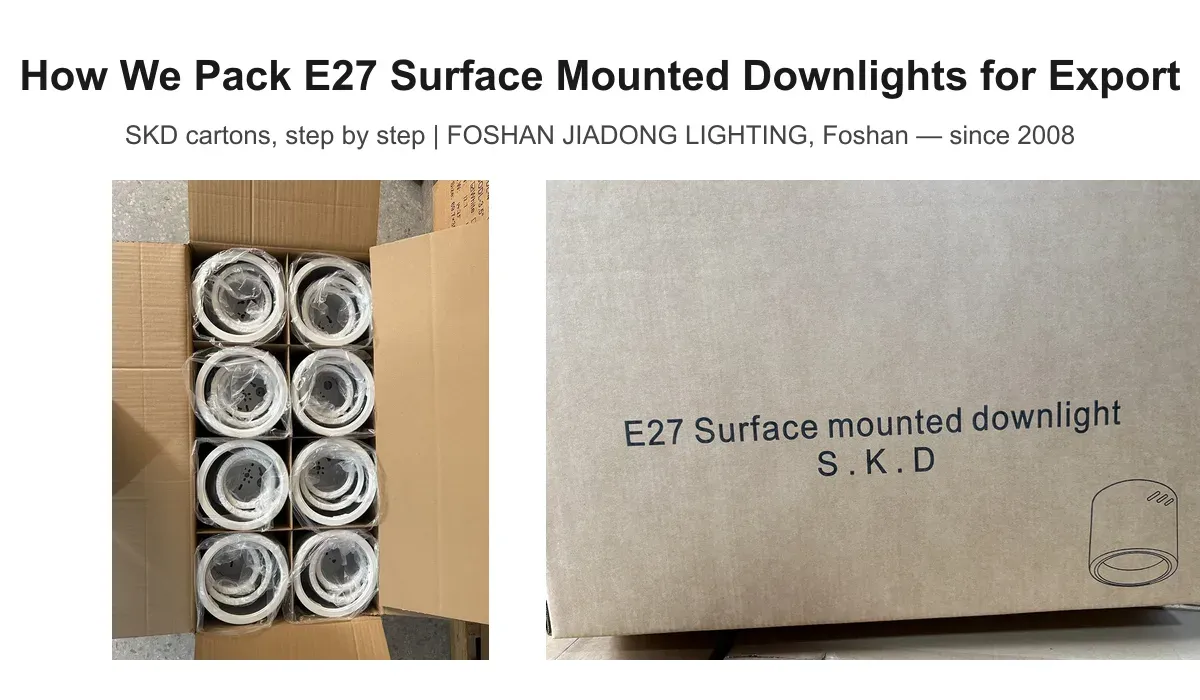
E27 | Edison screw | 27 mm | Lamp body with a screw base; needs the most depth behind the fixture |
For a surface-mounted fixture on a concrete slab there is no ceiling void to hide a protruding lamp in. A flat GX53 module keeps the fixture shallow and the ceiling line clean, which is why the format suits retrofit work in apartment blocks. If your range is GU10-based instead, the GU10 downlight housing buyer's checklist covers that format separately.
Stocking Logic: One Housing, Many Modules
The purchasing decision is not only which fixture to buy, but how to split the range across SKUs.
- Keep the housing as the stable line: three sizes and two finishes give six housing SKUs for a complete surface-mounted offer.
- Keep the module as the fast-moving line: wattage and colour temperature become separate SKUs that move independently of the housings.
- Carry spare modules as an accessory line. A distributor that stocks only complete fixtures cannot service an installed base without breaking a box.
- GX53 is a standard holder format, so a module will physically seat in any of the three trims — but the wattage still has to match the thermal rating of the housing it goes into, and the documented pairing is 7W / 12W / 15W for 3.5 / 4 / 5 inch. Confirm any cross-fitting with the factory before you publish it in a catalogue.
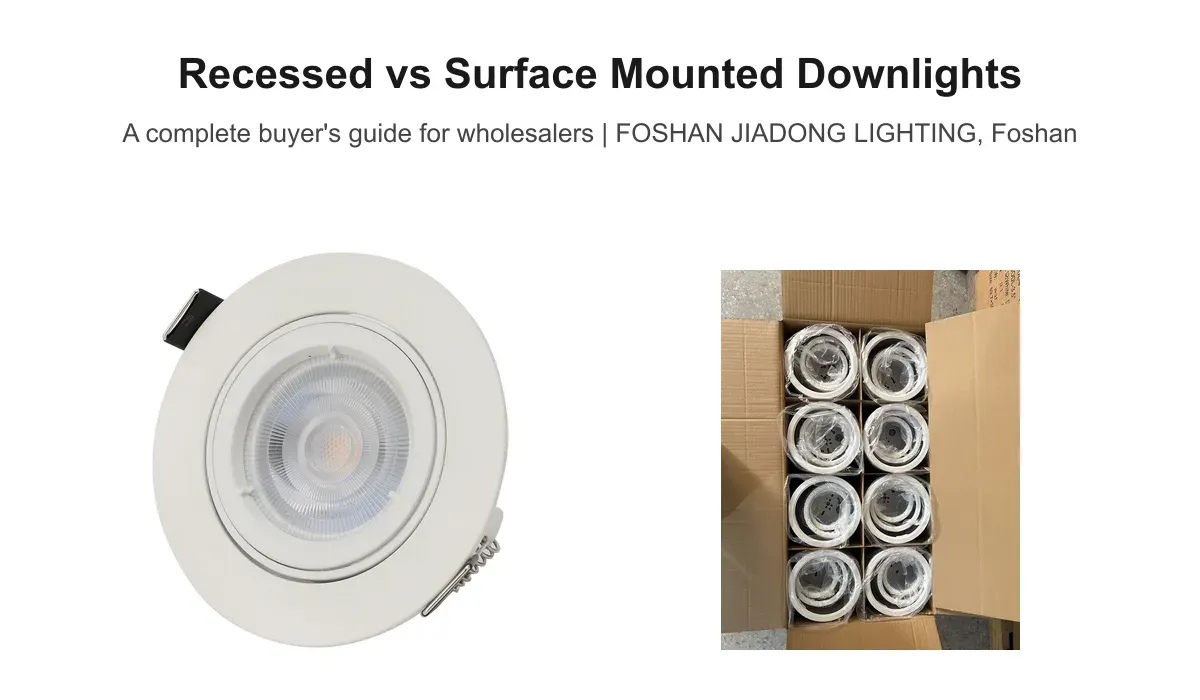
The GX53 split-type downlight range covers the size and wattage pairings in more detail, and the patented split LED surface-mounted downlight is the product page for the fixture shown here. Where a project mixes mounting types, the recessed vs surface mounted comparison explains which ceiling each version suits.
Diagnosing a Dead Downlight: Module, Holder or Wiring
Because the fixture is in three parts, a fault can be isolated before anyone books a call-out. This is the first thing a maintenance team should be given along with the installation sheet.
Symptom | Most likely part | Who can fix it |
|---|---|---|
One fixture dark while its neighbours are lit | GX53 module | Maintenance staff, by hand |
One fixture flickers or drops out intermittently | GX53 module (integrated driver) | Maintenance staff, by hand |
Module will not seat, feels loose, or scorches at the pins | Holder plate | Electrician |
A known-good module stays dark in the same fixture | Holder contacts | Electrician |
A group of fixtures on the same circuit goes dark together | Breaker or circuit wiring | Electrician |
The practical result: a fault that originates in the light source never reaches an electrician's job sheet.
Certification and Paperwork for Russia and Central Asia
The holder plate in the product video carries both CE and EAC marking. That matters because the region does not run on a single document — and because a marking on the plate is not the same thing as a certificate in your file.
- Russia, Belarus, Kazakhstan, Armenia and Kyrgyzstan are EAEU members: EAC conformity documents are what customs and retail chains expect.
- Uzbekistan, Tajikistan and Turkmenistan work to their own national conformity schemes, which are separate from EAC. Confirm the current requirement with your importer before cartons are printed.
- Ask the factory for certificate copies that name the exact model and wattage you are shipping. A certificate that covers a different model in the same family is a routine customs question, and it is cheaper to fix before shipment than after arrival.
- Ask for the label artwork and the carton marking in the same review, so the rating on the box matches the rating on the module inside it.
For a first order it is worth settling all of that — document, model match and carton marking — while the samples are still on your desk rather than at the port.
What to Put in an Inquiry
A GX53 inquiry that gets a usable quotation on the first reply usually states:
- the housing sizes required (3.5, 4 or 5 inch) and the split between black and white;
- the module wattage and colour temperature per size, and whether modules are ordered separately from housings;
- the destination country, so the conformity document and carton marking are quoted correctly;
- the quantity split between complete fixtures and spare modules;
- any label, carton or private-label requirement, and the artwork status;
- the target price band and the shipment window.
FOSHAN JIADONG LIGHTING manufactures the split-type GX53 surface-mounted downlight shown in this article and supplies it with the GX53 lamp holder fitted in the housing, the module as the removable light source, and the mounting bracket in the carton. Send the six points above with your destination market and we will come back with the configuration, the conformity documents and the wholesale terms for Russia and Central Asia.
Frequently Asked Questions
Can I replace a GX53 light source myself, without an electrician?
Yes. The module twists out and back in by hand and the fixed wiring is never exposed. Isolate the circuit at the wall first, because the holder itself sits on mains voltage.
Is GX53 the same as GU10?
No. Both are two-pin twist-lock formats, but GX53 has a 53 mm face and takes a flat integrated LED module, while GU10 has a 50 mm face and takes a lamp with its own reflector. A GX53 module will not fit a GU10 holder.
Do I need an electrician to replace the whole downlight?
Only when the housing, bracket or lamp holder has to be changed. That is a fit-out job. Replacing the light source is not, and it is the operation that happens most often.
Can I fit a higher-wattage module in the same housing?
The holder in the video is marked Max 30W, so never exceed that rating. Whether a specific higher-output module suits a specific housing also depends on the thermal design of that housing, so confirm the pairing with the factory rather than assuming the holder rating is the only limit.
Will it work on a concrete ceiling with no false ceiling?
Yes. The surface-mounted version fixes to the slab on a cross bracket with slotted screw holes, so no cut-out and no ceiling void are required. The recessed version with spring clips is the one that needs a suspended ceiling.
What finishes are available?
The range is supplied in matte black and matte white, the two finishes most common in residential and hospitality fit-outs in the region. If a project needs a different colour, raise it at inquiry stage so the tooling and quantity questions can be answered against that specification.