Oct 5, 2026Industry Information
Recessed vs Surface Mounted Downlights: A Complete Buyer's Guide for Wholesalers
Recessed and surface mounted downlights serve different ceiling types and projects. This guide compares installation, lamp holders and MOQ to help wholesalers choose the right range.
Downlights are one of the most versatile lighting formats for commercial and residential projects. But not all downlights install the same way — and choosing between recessed and surface mounted versions affects everything from ceiling preparation to lamp replacement and freight costs.
This guide breaks down the key differences between the two mounting types, compares their strengths, and helps wholesalers decide which range to stock for their target market.
What Is a Recessed Downlight?
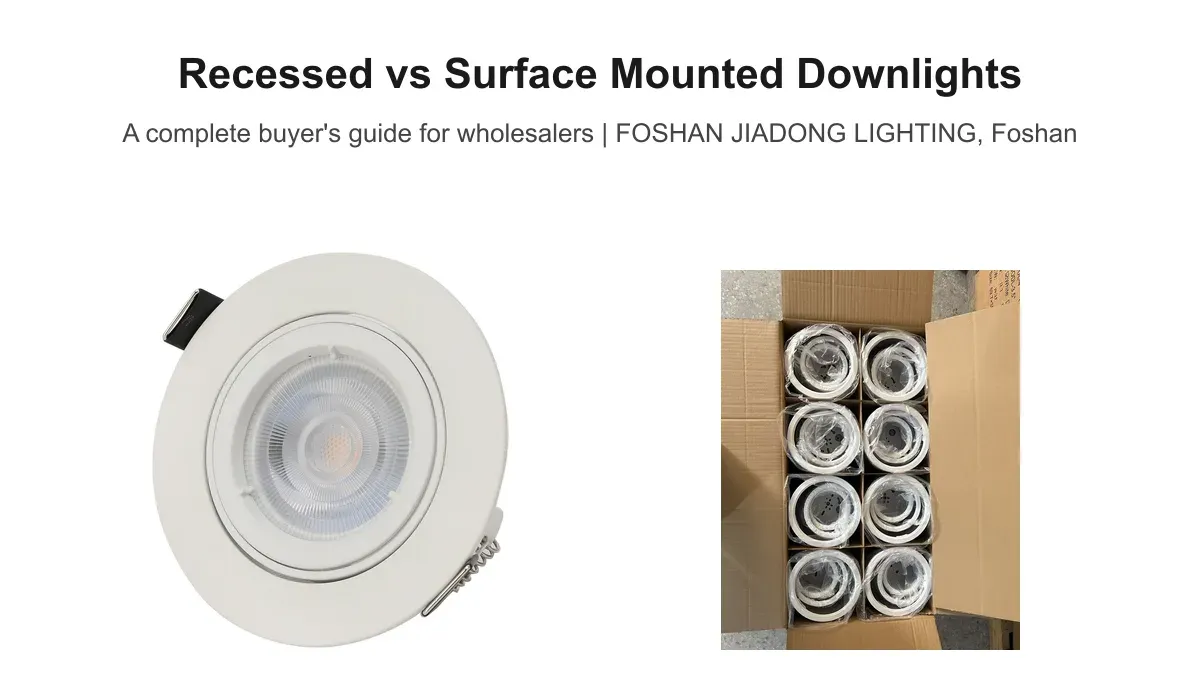
A recessed downlight sits inside the ceiling. The housing is hidden above the ceiling plane, with only the trim ring visible from below. Spring clips hold the housing in place against the ceiling board, so no visible fixture is exposed.
Recessed downlights work best in suspended ceilings, plasterboard ceilings and any project where a clean, flush look is the priority. They are the standard choice for offices, hotels, retail chains and modern residential developments.
What Is a Surface Mounted Downlight?
A surface mounted downlight fixes directly onto the ceiling surface. The entire housing is visible below the ceiling plane, which means no ceiling cut-out or recess is needed.
Surface mounted downlights are the practical choice for concrete ceilings, exposed structures and renovation projects where cutting into the ceiling is not possible or cost-effective. They are especially popular in Southeast Asia, the Middle East and Latin America, where concrete slab construction is the norm.
Key Differences at a Glance
Installation: recessed downlights need a ceiling cut-out and spring clips; surface mounted downlights fix directly onto the ceiling surface. Concrete ceilings favor surface mounted; suspended ceilings favor recessed.
Appearance: recessed downlights sit flush for a clean, invisible look. Surface mounted downlights are visible fixtures that can add a design element to the space.
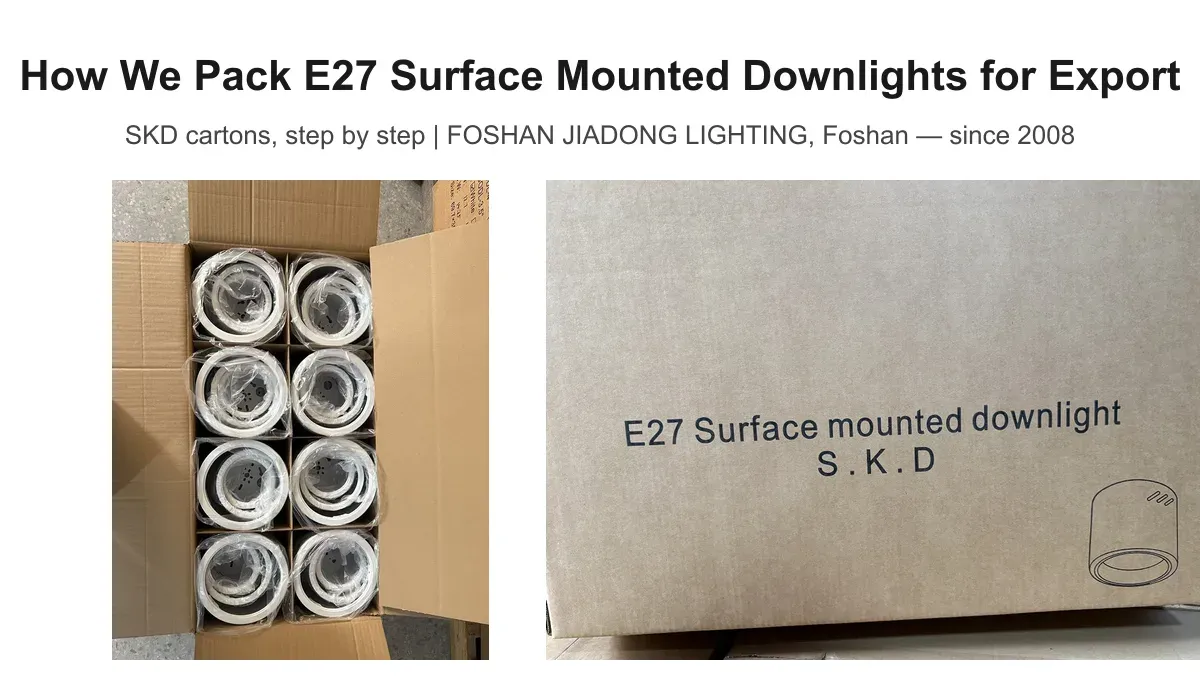
Lamp replacement: both types use replaceable lamps. GU10/MR16/G5.3 recessed housings have the holder pre-installed; E27 surface mounted versions use a standard E27 screw base. In both cases, the bulb and driver are not included.
Which Should Wholesalers Stock?
The answer depends on your market's construction standards. In regions with suspended ceilings (Europe, North America, modern commercial buildings), recessed downlights dominate. In regions with concrete slab construction (Southeast Asia, Middle East, Latin America), surface mounted downlights are the practical choice.
Many wholesalers stock both ranges to cover the full spectrum of ceiling types and project requirements. Contact your housing manufacturer for a combined quotation covering both families.
Frequently Asked Questions
What is the main difference between recessed and surface mounted downlights?
Recessed downlights sit inside the ceiling with only the trim visible; surface mounted downlights fix onto the ceiling surface with the entire housing exposed.
Which type works on a concrete ceiling?
Surface mounted downlights work on any ceiling type, including concrete slabs. Recessed downlights need a ceiling cavity for the housing and spring clips.
What lamp holders are available?
GU10/MR16/G5.3 holders are pre-installed in recessed housings. E27 screw-base holders are standard in surface mounted versions. The bulb and driver are not included in either type.
What MOQ and lead time should I expect?
MOQ starts from 2000PCS by model, with production lead time typically around 25 days. Confirm both per model when you request your quotation.
Request a Combined Catalog
Contact FOSHAN JIADONG LIGHTING for a combined catalog covering recessed GU10/MR16 housings, E27 surface mounted downlights and GX53 split-type downlights. Factory-direct quotations from our Foshan production base — visits welcomed.